Summary
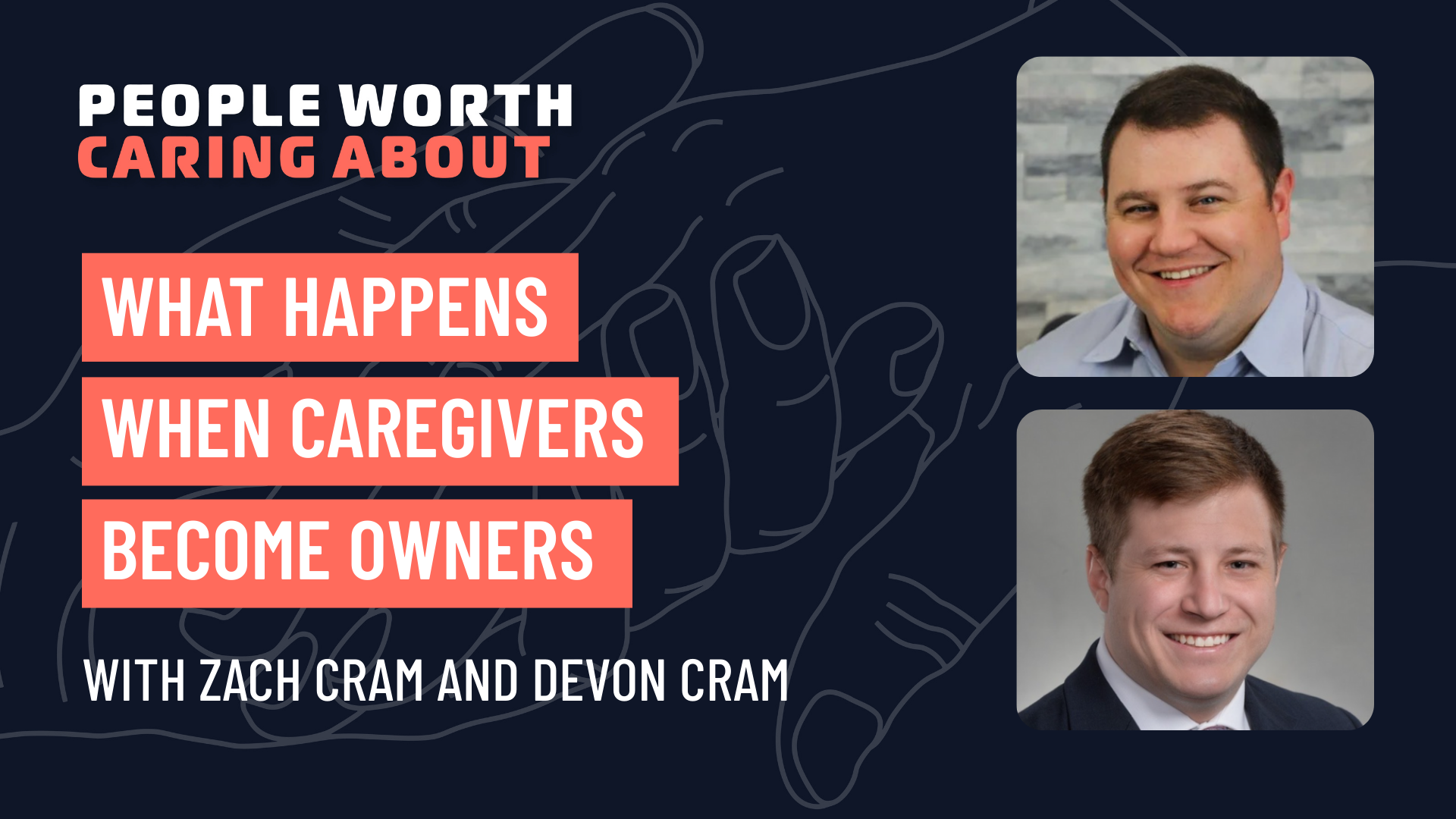
Zach Cram, President of Rehab Services at Rehab Strategies, and Devon Cram, Chief Financial Officer at The Strategies, share the story of building a clinician-led, family-owned long-term care organization in Indiana. They reflect on growing up in nursing homes, taking the risk to purchase facilities during COVID, and why putting patient care and community first shapes every decision they make. The conversation explores leadership, succession, culture, and the unseen people who make high-quality care possible.
Key Takeaways:
(00:00) Introduction.
(02:56) ChatGPT helped them identify and pursue media opportunities.
(04:24) A clinician-owned model shapes every care decision.
(06:24) Clinical experience informs leadership across the organization.
(07:46) Finance and operations require constant collaboration.
(11:28) Patient-first care guides business strategy.
(15:38) Staffing demands constant availability and accountability.
(17:11) Running facilities requires managing countless vendors.
(23:12) Investing in staff growth creates internal experts.
(27:33) Celebrating employees strengthens culture and retention.
Resources Mentioned:
Thank you for listening to “People Worth Caring About.” If you found value in this episode, please subscribe and leave a 5-star rating to help others discover these important stories.
For more information and to connect with our guests, visit PeopleWorthCaringAbout.com.
Listen on Apple | Listen on Spotify | Watch it on YouTube
Transcript
Zach Cram: I would say, kind of our motto is Hoosiers helping Hoosiers. For our facilities, we're Indiana-based, so that is sort of kind of what we live by. We want to help our communities and that comes with not just having the facility there, but having a presence in the community.
Peter Murphy Lewis: The world does not run on headlines. It runs on people who care. I'm Peter Murphy Lewis and this is People Worth Caring About. Alongside my co-host, Jalene Carpenter, we sit down with the unsung heroes, caregivers, healers, helpers, the ones doing the real work even when no one is watching. These conversations are not polished, they're personal, because behind every act of care is a story worth hearing. New episodes drop regularly. Get updates at peopleworthcaringabout.com. Welcome back to an episode of People Worth Caring About. I'm Peter Murphy Lewis. Say, oh hello, Jalene.
Jalene Carpenter: Oh, I'm gonna say hello to my friend Peter who just loves and enjoys that intro so, so much.
Peter Murphy Lewis: Oh, what's new? How have things been? What have you been up to?
Jalene Carpenter: Just all the normal things with all the kiddos. Basketball is life right now. So, we're doing all the things and being all the places and in all the gyms. How about you? What have you been up to?
Peter Murphy Lewis: Getting ready to go to Chile. I'm flying to South America tomorrow for a couple weeks with my family and I'm excited for that, and coaching my son's basketball. I wonder, did you get sick in New York?
Jalene Carpenter: No, I went to New York and immediately got sick, like the moment... Actually, I started to get sick when I was flying home from New York, but it feels like not surprising. And if you watch on the news, they are the hotbed of COVID and influenza right now. So, it's not a shocker but back up a second because we've talked about this Peter thing where you need to one-up me every time and I say, oh, I'm busy with basketball and kids, and you're like, oh, I go to Chile next week. So, you gotta prep me a little more ahead of time.
Peter Murphy Lewis: Okay, so I'll start omitting the fun things of my life.
Jalene Carpenter: All the cool things that you do in your life and that I don't do it, living in my awesome Nebraska little country lifestyle.
Peter Murphy Lewis: Well, how about this? You get to hang out with cool people who work in long-term care. Most of my work is remote, so you get to hang out with cooler people.
Jalene Carpenter: That is true. And we have some super cool people today that I'm really excited to talk to.
Peter Murphy Lewis: Yeah. I don't know if I'm gonna get this 100% right, so we'll have to ask Devon and Zach, but I believe that they discovered us by using ChatGPT, I believe about nine months ago and found People Worth Caring About. So let's let them in and do an introduction and then I'll ask them how they found us. Zach, Devon, welcome to the program.
Zach Cram: Thank you. Thanks for having us.
Devon Cram: Yeah, welcome. How are you guys?
Peter Murphy Lewis: Good. So tell us the story. I don't remember 100%, but I think it was AI, right?
Zach Cram: Yeah. So I'm in sort of like a little class that I'm trying to expand our reach with, and kind of a leadership class. And one of the things that he said that we need to start doing is trying to get ourselves out there on any sort of media we possibly can, and so his main idea, or one of the main ideas, was to ChatGPT the top podcasts in your field and just reach out and see if you can get on one and see if people want to hear your story, just to use that as media clips, things like that. And you guys were one of the very first ones that popped up and responded to me, and I think, then we just kind of got introduced to each other and here we are now. So it's been a little bit of a process, a little bit of time, but yeah, it was ChatGPT that got us in touch.
Peter Murphy Lewis: I love it. Thank you, Sam Alter. Did it say who is the better host?
Zach Cram: It did not.
Peter Murphy Lewis: Well, you're gonna know in a minute.
[overlapping conversation]
Jalene Carpenter: Yeah... Don't worry, it won't take long to figure that part out of this, as Peter corrects me after every question that I ask. But I'm curious, Devon, and maybe if you wanna talk a little bit about your organization, because it's my understanding that you are a generational company, that it's multiple generations, and in our industry that is exceedingly rare. So can you tell us the story there?
Devon Cram: Yeah. So Care Strategies is a family-owned and also clinician-owned nursing home company. We own five nursing homes around the state of Indiana, and we started in 2018. We bought our first nursing home, kind of thought that we knew everything about it and quickly realized that there's a lot that we didn't know about the industry, but fast forward to 2025, we are hitting all-time census, all-time quality scores, and we've really come into the industry and we believe that we are doing things the right way and excelling far past what we could have ever thought we were going to be in this short amount of time.
Jalene Carpenter: That's awesome. Okay. So I don't know... I don't offer, want to try to guess who's older, who's younger, but this was not like, you didn't grow up with your parents in the industry. This is a new industry for both of you, or had either of you worked in long-term care in some capacity?
Zach Cram: Yes and no. I... So I'm older and I'm actually a physical therapist by background, and our father, Ron, who is the CEO of Care Strategies and all the family of companies we have, is a physical therapist as well. And the way we got into this is, he was the... is the CEO of our company, Rehab Strategies, which is our therapy company that does contract therapy for long-term care and skilled nursing facilities, and we've done that our whole lives. We've always worked with nursing homes. And being in them so much, we were seeing things that we thought weren't great care or things that we thought we could do better, and so once we kind of got our rehab company large enough and successful enough to kind of support other things, that's when Ron, our dad, went out and started buying facilities to run them from a clinician-based viewpoint that really emphasizes care and quality, and so, to answer your question, we have always grown up in nursing homes.
Zach Cram: We've... Devon and I, and my wife is an OT and she's worked for us forever. And Devon's wife is an administrator, Devon's an administrator. And... So we've all... The four of us, his wife, my wife, and Devon and I have done pretty much every job in a nursing home. We've all worked... Started working there before we could drive. We were techs or aides, things like that, and it just grew. I went into the therapy route and kind of followed my dad's footsteps there. Devon went to the more business-focused side of it, got his MBA and his HFA and so, kind of we feel like we have a really good grasp on the whole long-term care industry from all aspects with kind of all of our team that we've put together.
Peter Murphy Lewis: I have two questions about the jobs. The first one is, I want you to describe the split. Who owns what, operations, people, culture, and then where do you overlap? Why don't you take it, Devon.
Devon Cram: Yeah. So I have a team of five that work with me and I have two billing specialists. I have a business office manager that oversees the business offices at each of our five facilities. And then I also have a accounts payable/payroll employee as well and I would say our culture is kind of everyone, all hands on deck, step in, help out where you're needed, and cover for your partner as well, so our group is very cohesive and friendly and we all work super well together, which is amazing. And I obviously oversee all of the finances and the budgets and forecasting and things like that, but I'm also, like Zach said, an HFA. So I do get involved in some operational discussions and I will also fill in when needed as an administrator at one of our buildings if we need it. So, yeah, that's kind of my role within the company.
Peter Murphy Lewis: Zach. So, it sounds like you always get along, but I have a brother and there's no way that you guys always get along. Give me an example of the most recent dumb disagreement. So, over coffee or who showed up late or left their cell phone on. It has to be trivial.
Zach Cram: Yeah, I mean, we do get along really well. I think the thing that it kind of makes us work well together is that we're sort of opposites. I'm a little more outgoing and kind of a people person. Devon's a little more just kind of reserved, wants to be doing the numbers and the work like that. As far as disagreements go, things come up all the time. We actually live in the same neighborhood, so we're constantly hanging out.
Peter Murphy Lewis: Do you TP his house?
Zach Cram: Yeah. TP his house quite often. No, I don't know. Have we gotten in an argument lately, Devon?
Devon Cram: Nah. Probably about like something on the Colts being good or not or something like that.
Zach Cram: Yeah, usually it's sports-related. We argue about the Colts all the time, but no, I mean, we do get along for the most part at all times, and we kind of have to, I mean, being this, the family business pretty much everything that we do is together, and we're always talking about the company. You mean, dinner conversations are constantly talking about what's going on at the buildings and everything like that. So, we sort of have to work together well because we're stuck with it, so...
Jalene Carpenter: Well, I'll chime in. So, if you haven't argued about this yet, and I'm speaking as also a fellow nursing home administrator by background, I'm assuming, Devon, you win the argument of who has the harder job, right? The therapists, the PTs, the OTs, or the administrator who's trying to right the ship. See, I got smiles on that one, Peter.
Zach Cram: Yeah, definitely true. Yeah. Go ahead, Devon.
Devon Cram: Yeah. The administrator job is a very difficult and complex job, and I've only had to step in a few times, but when I have, it really opens your eyes to see all aspects of the building and what's going into it to make it run, and it is a really impressive operation to be able to fully understand and work in.
Zach Cram: And I will say that too. Being an administrator is a 24/7 on-call at all times, and that's one thing therapy is not. So that's kind of nice, so...
Jalene Carpenter: I helped win that argument for you there, Devon so...
Devon Cram: Yeah, thank you.
Jalene Carpenter: Zach, you... So you mentioned, long time in the therapy space, service, long-term care, and then jumped in, in 2018 right before the lovely 2020, but you described it as you wanted to run an organization, run a nursing home organization with a clinical nature to it. Can you unpack that a little bit more? What does that mean? Because people think ‘nursing home’ and they automatically think clinical, but to hear you say that that was your intent behind it, I would love to hear more about that.
Zach Cram: Yeah, I mean... So, a Rehab Strategies, is our therapy company, has been our bread and butter forever, and that's... It's just what we did. We were never, if you would have asked us 10 years ago, would we own nursing homes? We would have said absolutely not. But the way we've grown Rehab Strategies, now we have about 20 locations, not just our own buildings, but other locations we contract with across Indiana and Ohio. And the way that we've grown and had success with that and kept our therapists happy is just treating the patient really well, giving them the care and service that they need and deserve. And we are, our whole slogan is always, if you take care of the patient first, everything else falls into line.
Zach Cram: And a lot of times, especially with these huge nursing home chains that have hundreds of buildings, the people making the decisions typically are businessmen or people who have never really… at times, have never really gotten their hands dirty or they have a team of people who've done that, but sometimes the folks at the top haven't really been in the nitty-gritty. And so I think being able to make decisions for people's entire... I mean with therapy, we're helping their life get better in a physical aspect, but someone else is taking care of them the other 22 hours a day when they're not in therapy. We wanted to take our great therapy care and apply that to their full care, their bathing, their clothing, their dressing, their meal, their happiness in activities.
Zach Cram: We wanted to take the therapeutic approach to all of that and increase the quality of life totally. And the decisions that we make are based on purely just giving good care, and I think just being a clinician and working with a patient, especially in a field like therapy where you are seeing gains and your main goal is to get someone back to a level that they were before, I think being able to apply that to the continuum of long-term care is really unique to us. Because like I said, a lot of these folks making the decisions in the corporate offices for these big chains aren't therapists or nurses, so it just gives us a better mindset to always take care of the patient first.
Peter Murphy Lewis: Devon, I want to go back to a family question. And what is it about Zach that he's most like your father?
Devon Cram: I would say probably his ability to go in a room and kind of brighten it up and be able to interact with anybody in there, whether it be staff, residents, telling jokes. He's personable, outgoing, and they both are like that, and I think he's really, really good at doing that.
Peter Murphy Lewis: And Zach, what about Devon is most like your father?
Zach Cram: Yeah. So, I think the thing that kind of sticks out to me most is, as you can tell, I'm little, I try to fluff things up and I'm a little... I can be a little over-dramatic at times like that. Devon and my dad are both very, cut the fat, get to the point, and give me the pertinent information that I can make decisions with. And Devon is very much like that, he takes the information, he analyzes it, and then he makes the decision right away with no fluff, no... He doesn't put emotion into it, and he's always very level-headed and Ron, our dad, is always very level-headed. And in long-term care, things happen all the time that you just can't believe or a lot of people have emotional reactions to. Ron and Devon are not like that, they're problem solvers and they just get to the point, so...
Jalene Carpenter: So knowing that about the two of you and your similarities to your dad, you said on the outset that when you bought nursing homes, you thought you knew nursing homes. I'm curious from each of your perspective, like Zach, you can start here, what was the thing that you thought you knew that you learned very quickly that you didn't? And then Devon will have the answer after.
Zach Cram: Yeah. Like I said, coming from the therapy background, we just thought, hey, therapy is the most... Therapy is the main thing in a nursing home. We know that, so then everything else will be taken care of. Turns out, that is a very small aspect of the whole thing. I would say staffing mainly has been the thing that we probably weren't expecting. I mean it is a 24-hour job. The buildings are open all the time, on the holidays, no matter what. And the people have to be taken care of at a high level no matter what day of the week or when it is, the weekend. So I would say, the overarching feeling of always being on call in some capacity and always being the people that, when things get to the top, someone has to make those decisions, make those calls, and it may be at 3:00 a.m.
Zach Cram: We had to go.. We had a tornado up near one of our buildings. We didn't have a whole lot of issues with it or anything, but it was pretty bad in the area. And so, at one night at 3:00 a.m., Devon and I had to drive about two hours to one of our buildings to make sure everything was fine. Just things like that that you don't really think about when... From the therapy background again, I saw the patients for two hours a day, tried to make their day better during that time and get them better, but there's also 22 other hours in the day that they're needing care and needing someone to look after them, so...
Peter Murphy Lewis: This show is powered by AAG Health, the team behind the teams. If you're building a care team that actually cares, nurses, doctors, techs, admin pros, AAG doesn't just fill jobs, they find people who show up and stay. Visit AAG.health and see how fast the right people can make all the difference.
Jalene Carpenter: Devon, what did you... Thought you knew or you learned very quickly you didn't know?
Devon Cram: Yeah, I would say, at least in my role, the amount of vendors and things that go into keeping a facility like this running is just huge. I mean, you have all of your utilities, you have all of your medical supply vendors, you have your food. You're basically running a 24/7, all aspects of their life you have to be involved in and just be able to take care of them like Zach said. And then I think nursing, as a therapist, you think you know a lot of clinical things, but the nursing aspects are also another huge point of that. And being able to hire the right nurses and have the training and the corporate-level people in line to be able to help them is one thing that I think we lacked at the beginning for sure.
Peter Murphy Lewis: I'm interested in the succession plan from a personal level. I think it was thought that I would follow in my father's footsteps and run our family business. I probably thought that would be the case until I was about 17, and being paid minimum wage for three years in a row when my co-workers were paid more than I, and high expectations of me. I think looking back on it, it was a great decision that I didn't, especially because the current CEO does a way better job than anything I would have done. What's been the scariest part for you once you had the conversation or this implicit conversation that the two of you are gonna take over? What's been the hardest thing for you to fill your father's shoes from an expectation point of view? Start with you, Zach.
Zach Cram: Yeah, I mean he... Luckily for us, he's still very much involved and he's still calling the shots and doing all that. We're sort of in the training session right... Training phase right now to where we're kind of studying under him, seeing everything that goes into it, but I would say the one thing, the scarier part for me actually came from a very early age. I decided to follow in his footsteps therapy-wise because that's all we had and all we knew. And I always knew I wanted to be a therapist from going into the facilities with him when I was young and just... Our ongoing joke is that I always said I love that job just because he gets to hang out with old people all day and just... And joke around with them. And so, I followed in those footsteps. The scary part to me came when our whole family decided to shift our focus from just therapy to taking a huge risk in purchasing facilities. And do I want to just remain in that therapy... That I just want to remain in the therapy universe, or did I want to take that risk with him and get into the facilities?
Zach Cram: And that's still a transition in process, that's right now. Ron left kind of the therapy company for me to run while he's focusing on the nursing homes now. And now that I've got that kind of going pretty well and under control, now I'm starting to shift my focus too a little bit to start working on the nursing homes. So I think that's been the part that for me was... Is kind of the most challenging and daunting and financially, too, our whole family is tied up in these facilities. So it's... It is a lifestyle that we've all had to jump into headfirst, and I'm glad we did. And like you mentioned earlier, buying... We bought the majority of our nursing homes during COVID, which is like, you do not want to buy nursing homes during COVID, but I'm glad we did jump in and I'm glad that I've got the therapy side of things pretty solidified now. Now I can start focusing on learning the facility side of things, so...
Peter Murphy Lewis: Your family must be terrifying for any banker because nobody can really co-sign. You guys have all of your poker chips in the exact same hand. Devon, is there anything that you would add to the fear factor that your brother said, or would you say the exact same thing?
Devon Cram: Yeah, I would definitely agree with what he said. I think another... Yeah, I mean, just that our whole family is fully invested in the success and the growth of these companies, we really cannot fail. So, we all know that and we all put in the effort to make sure that we don't, and I think that's really what makes us unique compared to some of the others because we own the bricks and mortar of our facilities. We own everything, the real estate and everything. So we are fully invested in making the success of this and we're definitely working to make that happen, yeah.
Jalene Carpenter: That's awesome. So, Devon, you mentioned growth. So, is that on the trajectory? Is that in the future plans?
Devon Cram: Yeah, definitely in the future plans. We would probably like to double in size if we could, take it from five to 10, and I think we have the infrastructure now and all the pieces in place to be able to make that happen. We just have to be strategic and just waiting for the right opportunities and over time we will be able to grow, but we're not gonna be super fast to do it again. We, like Zach said, we bought four facilities within one year, and that was during COVID. So, I think we bit off a little bit more than we could chew at that time and now we're settling back down and we're able to kind of look forward to growth again, yeah.
Jalene Carpenter: So I'm gonna steal one of Peter's questions. He'll forgive me later and that's okay with me. So if you don't know, if you haven't watched the docuseries that Peter created, People Worth Caring About, or if you haven't listened to some of the other podcasts... When Peter and I first met, it was all about telling the story and telling the story in a real way, which meant showing real people that actually do the work every single day in our communities. So, I am curious while you two are clearly the face of your organization, who is one of the unsung heroes, whether at a community or within your home office, you want to make sure and tell their story and make sure and say thank you to?
Devon Cram: Yeah, I'll take that one to start. When we first started at our, one of our smallest facilities, we had our amazing front office/medical records scanner, Angie. She was working part-time for us, also working at Ball State just as a medical record scanner. And we saw the opportunity and how hard she was working and things like that and we saw that in her and we actually allowed her the opportunity to teach herself and go to courses, and she's become our number one. She is our Medicaid billing specialist and she's even succeeded so much that a few of the bigger chains in Indiana go to her when they need questions answered. She knows that the Medicaid billing like the back of her hand. And with Indiana, we've had tons of changes with the process and Angie is the state's right-hand woman to be able to navigate those and help people out. So, she's a incredibly impressive story and she is part of my team, which I truly appreciate so much and the work that she does every day is really amazing. Yeah.
Jalene Carpenter: Awesome. Zach, is there anybody you... That comes to your mind immediately?
Zach Cram: Yeah. I think I'll focus on the... My therapy team for this one but my current regional manager of Indiana, her name's Susan Crook. She's an OTR by background and she has actually worked for our companies... since when I was a baby. I mean since I've been a kid, she's been with us through all the different changes and everything we've done. She's been a team leader or director of rehab at multiple big, large facilities for us. And we actually, we had a gut punch a couple of years ago where the facility she was running our rehab for decided to take therapy in-house and that so they didn't need contract therapy anymore, which ended up resulting in us having to get rid of those positions for therapists.
Zach Cram: However, Susan said, I want to stay with you. I'll do whatever it takes, whatever you need. I'll make it work. So, essentially what she does now is, she is just essentially the OTR for a lot of our facilities where she will... At the drop of a hat, she gets a call that there's been an admission or something, she's driving two hours to facilities around us to do evaluations and things like that. And she never once complains, and she just said, she has loved working for our dad basically her whole career. And since I started running the therapy company, she said, I want to stay and be loyal and even though that position of hers got eliminated, it actually worked out much better because now she's went from an OT to the team leader to now pretty much running all of our facilities in Indiana for me, and she will do it no matter what.
Zach Cram: She is a company-first person that is truly loyal, and if it's best for the company, she will do it, and that's hard to find nowadays. I mean, she... A lot of employees aren't that way and the company's just a place that gives them a paycheck, but Susan truly believes in the betterment of the group. And if that means her having to go on a Sunday afternoon to do an eval two hours away, she will do it every single time, so...
Peter Murphy Lewis: Gentlemen, I have some rapid-fire questions for you. Are you ready?
Zach Cram: Yeah.
Devon Cram: Yeah.
Peter Murphy Lewis: All right, Devon, what's one tradition that your father brought into the company that will never change even when he moves on? It can be simple or big.
Devon Cram: Probably celebrating employees and accomplishments within all of our teams, whether it be a CNA that's been with us for 30 years or a nurse getting a wound certification. We will always celebrate and show gratefulness to our employees and I think that that plays a whole huge factor in employee retention and also just the culture of our company that I think definitely needs to be kept even after he's retired or whatever.
Peter Murphy Lewis: Great. Zach, unwritten value or unwritten rule about your all's business? And to give you a little bit of time, I'll tell you mine. Inside of our company, we always say, if you're gonna get it done, you better have fun. What do you guys live by?
Zach Cram: I would say, kind of our motto is Hoosiers helping Hoosiers. For our facilities, we're Indiana-based, so that is sort of kind of what we live by. We want to help our communities and that comes with not just having the facility there, but having a presence in the community and three of the five buildings we own are very rural and very... And we're one of the biggest employers in the whole county that they're in. And so, I think that comes with a responsibility of being out in the community, being in groups and in boards and having our employees be active and giving back to the community. And so I think, Hoosiers helping Hoosiers is what we say and that's kind of what we try to live by.
Zach Cram: We want to be helping people in our own backyard and helping people in our own communities and even though we're based in Indianapolis, we've become a part of the communities that we service. And I think... Like I said, just having that presence, being hands-on in the communities, in the facilities, we are truly helping Hoosiers to try to live out their best possible quality of life that we can. And helping the communities, the school systems, giving a place where we let schools come and volunteer and kids learn about nursing homes. I think that is truly Hoosiers helping Hoosiers, and that's what we try to motto and what we try to model after.
Peter Murphy Lewis: Devon, describe your brother in one word.
Devon Cram: I mean, one word is tough. I would say, realistic. So he keeps his goals realistic and he also keeps what he believes... I don't know what I'm trying to say, actually, but I would say that he's very realistic in his planning and his thought process about things. He never gets too high or too low kind of just... I dont know, do you have anything to say about that, Zach?
Zach Cram: Yeah, that's tough. One word. Yeah. I mean, I do feel like I'm pretty realistic. I try not to overhype certain situations or underhype them. I try to not make mountains out of molehills, and so, yeah. I mean, I think I feel like I'm realist, logical. I try to base everything in logic and reason. So, I would say, yeah, realistic is a good one.
Devon Cram: I was just thinking about myself and I'm probably more optimistic than he is. So, I was trying to tone that back a little bit, but...
Zach Cram: Yeah, you are more optimistic. Yeah.
Jalene Carpenter: So, I would be curious. I was gonna ask you, what advice you'd have given to your younger selves knowing where you're at today, but since we've had this family therapy session, but I guess you can choose. You can answer what advice would you give to yourself, or I don't know. So give you just the opportunity of maybe to say what you're most proud of so far on this journey.
Zach Cram: One thing that I would tell myself is definitely just trust the process and the preparation because, like Devon said, when we first started getting these five buildings, it was during COVID. It was chaos. Things were changing like crazy and we were literally... Our family would have, like we said, dinners and meetings and things that we were living and dying on every little thing that would happen in the facilities. And we all kind of got to the point where we took a step back and relaxed, we realized we're not gonna be able to control every single patient in every facility 24/7. And so I think telling... The thing I would tell myself was, it's gonna be all right, we have a team in place that handles these things. It doesn't all fall on our shoulders by ourselves and so, I would tell myself not to worry about the small things that were coming up that were really driving us crazy in the early days of the company.
Zach Cram: And so yeah, I would just... Like Devon said, I'm a little bit pessimistic. So I... It was always getting to me, but just being able to relax and step back now and know that we've put the care and the preparation in to handle certain situations is a lot more relaxing or a lot more reassuring I guess, that we're gonna be all right. The thing I'm most proud about I think, at the end of the day, I truly am a proud physical therapist. I love being a clinician. I love the fact that it took us in this path where like I said we... I started by just wanting to get patients better medically and get them more functional and now it's gone into being able to take care of their whole life, essentially every aspect of it. And I'm really proud to bring the clinician aspect into ownership where we're making decisions based on what's best for the patient and their quality of life and not the bottom line.
Devon Cram: Yeah, I mean, I would say that I'm probably most proud of being able to work with family and have family involved in every aspect of the company. Being able to work with my brother, my dad, my mom, my sister-in-law, it is just a great bonding thing. Whether things are good or bad, you're talking about them and you're able to joke and laugh, and it does bring our family together and we all know that the one common goal is for this company and all of our employees and all of our residents to succeed and... Just being able to do that with our family is really impressive and you don't see that too often anymore, so I am proud of that.
Jalene Carpenter: That's awesome. All right, Peter.
Peter Murphy Lewis: Gentlemen, thank you so much for joining us. All I can say, what I've learned from this is I'm really happy Jalene and I don't work in the same building or the same business. We wouldn't get along as well as you do. So thank you so much. Your story is beautiful. I hope one day when we're searching in AI, we'll read a documentary about the Cram family and how you guys are carrying on your family's legacy. Just to wrap it up, you know that AI is taking over the world and ChatGPT in a year from now will be making decisions for all of us, and you know what they're gonna tell you who the best host of People Worth Caring About is. Thank you all. Have a great rest of your week.
Jalene Carpenter: Bye, guys.
Devon Cram: Thank you again, Peter.
Peter Murphy Lewis: That's a wrap on People Worth Caring About, born from the documentary built to keep the stories going. Shout out to Nebraska Health Care Association and Jalene Carpenter for helping launch it, and to Ohio and New Mexico for making future seasons real. Watch the docuseries online or at peopleworthcaringabout.com. And if this episode meant something to you, leave a review. It matters. Take care of yourself and the people worth caring about.
#HealthcareLeadership #SkilledTrades #PeopleWorthCaringAbout
