Summary
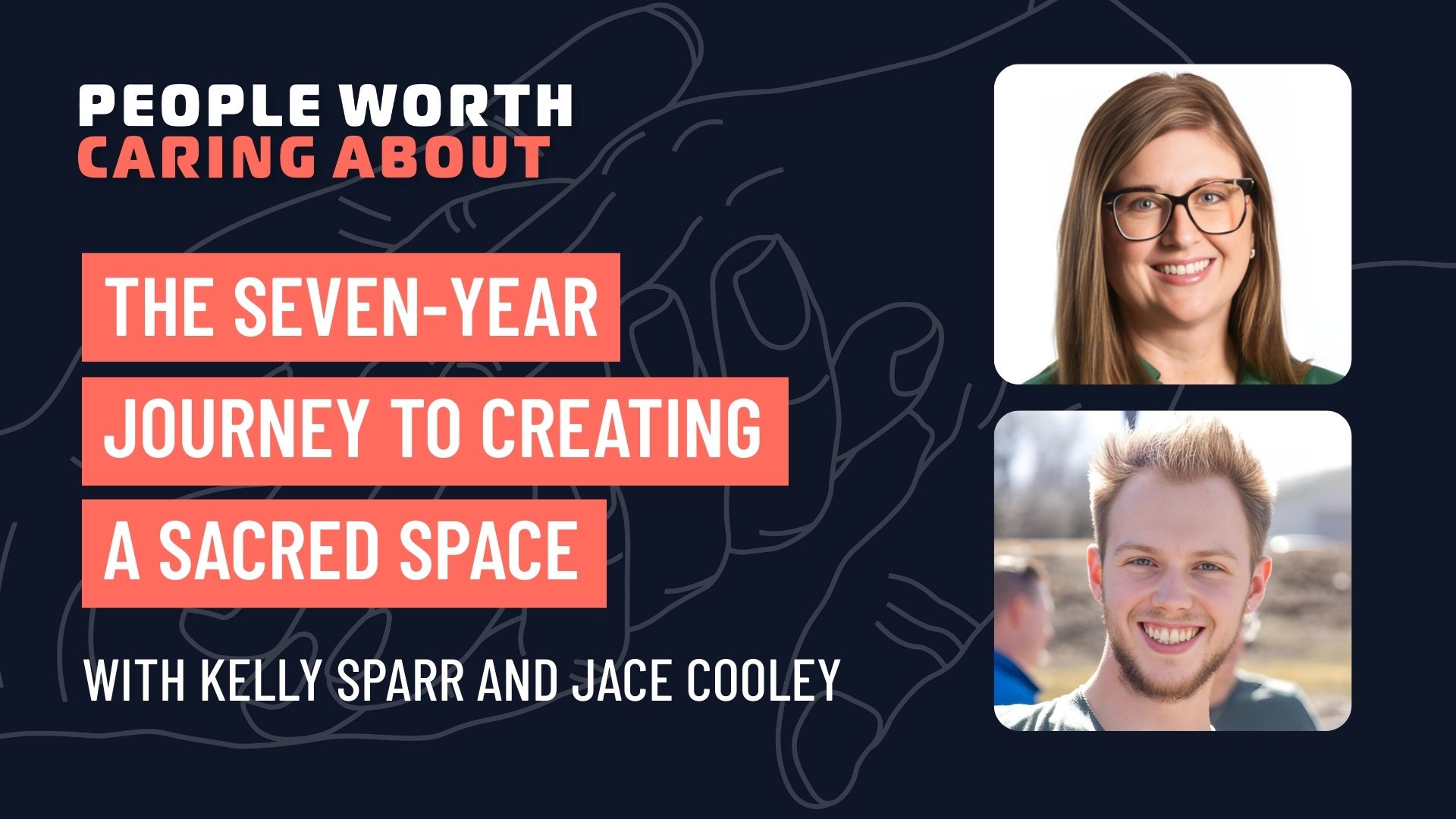
In this episode, hosts Peter Murphy Lewis and Jalene Carpenter sit down with the heart and soul of The Grace Space, a hospice facility in Nebraska. Kelly Sparr, the founder who spent seven years bringing her vision to life, and Jace Cooley, a dedicated CNA turned nursing student, discuss the profound beauty found in end-of-life care. From the unconventional path Jace took from installing sprinklers to guarding souls, to the vital role of Pickles the therapy dog, this conversation reframes hospice as a place of deep human connection, dignity, and even joy.
Key Takeaways:
(00:00) Introduction.
(03:12) Documentary episodes help comfort families from long distances.
(07:53) Seeing oneself on screen reveals personal communication strengths.
(11:01) CNA work is a challenging yet rewarding career.
(17:40) Pickles the dog provides comfort that humans cannot.
(21:11) Employee retention requires personalized connection and genuine listening.
(25:00) End-of-life care is a raw and vulnerable privilege.
(27:47) Education helps normalize death as a beautiful transition.
Resources Mentioned:
Southlake Village Rehab website
Thank you for listening to “People Worth Caring About.” If you found value in this episode, please subscribe and leave a 5-star rating to help others discover these important stories.
For more information and to connect with our guests, visit PeopleWorthCaringAbout.com.
Listen on Apple | Listen on Spotify | Watch it on YouTube
Transcript
Jace Cooley: I will say the biggest thing is letting us feel like we've been heard. So, if I were to go talk to someone that's higher up than me and I have a problem or an issue or something, I want to be heard and I want to be... Have them actually at least act like they care what I'm saying. I think that's a huge problem nowadays is a lot of the higher ups don't really listen to the lower tier health care employees, and those are the people that you really want to listen to, because when they see it firsthand.
Peter Murphy Lewis: The world does not run on headlines. It runs on people who care. I'm Peter Murphy Lewis and this is People Worth Caring About. Alongside my co host, Jalene Carpenter, we sit down with the unsung heroes, caregivers, healers, helpers, the ones doing the real work even when no one is watching, these conversations are not polished, they're personal, because behind every act of care is a story worth hearing. New episodes drop regularly. Get updates @peopleworthcaringabout.com.
Jalene Carpenter: Hi, Peter. You're going to be amazed one day. I'm going to respond in German. It's going to be great.
[foreign language]
Peter Murphy Lewis: Rock Stars from Gray Space, episode four...
[foreign language]
Jalene Carpenter: I guess I know that we have some really awesome, very important rock stars with us today. My Spanish is getting better every time we talk.
Peter Murphy Lewis: So you did take Spanish in high school. You understood what I said?
Kelly Sparr: I did take Spanish.
Peter Murphy Lewis: Nice. That was in Seattle, not Lincoln?
Jalene Carpenter: Correct.
Peter Murphy Lewis: Yeah. Well, today's special because we have two important guests from the documentary from the docu series, People with Care about episode four. If you haven't seen it, listeners, go watch it. Actually turn off this podcast and go watch it, because this episode is going to be more fun when you see these... The care that this place does and kind of the rock star of the show, Jace plus a four legged friend and an amazing resident as well. What do you remember about Gray Space, that episode that you want to talk about today?
Jalene Carpenter: Oh, there's so much Peter. Obviously, Kim, the resident was just unreal. There was a lot to it. But one of the things that I love that you did as the host is you wove in sort of this cultural American thing that we do, which is to like push death aside and really not embrace death. And so, to just highlight that and talk about it was, I thought was really impactful. And then of course, to just see the work that they're doing. Oh yeah. So pause the podcast, go watch episode four because they'll... I think people will understand so much more once they've seen it.
Peter Murphy Lewis: Before I do the intro. I don't think I shared this with you. I was in Indiana a month ago at the trade show and a woman came up to me afterwards and she told me, she said, peter, I use the hospice episode four from Nebraska and I send it out to prospects, to families, to residents, to patients who are going to come here, and that is the most beautiful way that they show how special hospice is. And everybody says it makes them feel so much more comfortable. How beautiful is it that they are using something that we did in Nebraska to help families in this scary moment in a state that you know is a 20 hour drive away.
Jalene Carpenter: It's amazing, but it also goes to show, Peter, that's what we were trying to do with the docu series in the first place was to tell the story in a different way. And the fact that it's being used and being seen and streaming, and amazing because it... I think it just accomplished what we were trying to do, and I'm excited for these two because you don't know this Peter, but I've known Kelly for a very, very long time and she has been in our industry for a long time. So excited to give a share both of their stories.
Peter Murphy Lewis: Today's guest is Jace Cooley, Lincoln born nursing student on the LPN go into the RN path dedicated CNA med A at South Lake Village previously at the Gray Space Adult league hockey ringer dog dad to Pickles the four legged beautiful star of episode four. The beloved moral booster at the Gray Space. Jace is a joy maker. I know that he used to make snowmen or snow them snow women in front of the windows for his residents to make them laugh during snowstorms. He once found one of his residents wedding rings and she had dementia and he hid it for a moment and then proposed on a knee to her and she remembered, she knew that he was messing with her and she laughed. He brings joy to hospice and long term care and a really, really special person. Jace doesn't know this Jillian, but I have done many, many keynote speeches in the last year and I often talk about Jace really, really, really special person and it transitions into our second guest, because I asked him before this who is one of the most important people in his life, who is his superhero, who is his mentor, who is his influencer in long term care and her name is are you ready Jalene?
Jalene Carpenter: Ready.
Peter Murphy Lewis: You got a guess?
Jalene Carpenter: I know her name, Peter.
Peter Murphy Lewis: Kelly... Go ahead.
Jalene Carpenter: Sparr.
Peter Murphy Lewis: Yeah. And the words he says, the definition of integrity. Modeling tough conversations done with love. Please welcome these two caregivers with heart, humor, and great episodes on people worth caring about. Jace Cooley and Kelly Spar. Jace, welcome to the program.
Jace Cooley: Thank you. Thank you for having me. I'm excited.
Peter Murphy Lewis: Kelly, how does that feel? You didn't know I was going to include you in that introduction? How'd that feel?
Kelly Sparr: No, I'm a little emotional about that. I love it. Thank you. I didn't know that.
Peter Murphy Lewis: Well, really excited to have you here. I don't think I shared this with either one of you, but I had never been in a hospice until the day I walked into film. What you all do at the Gray space, and it was life changing for me. You all sharing with me, your family, your friends, learning how to do hair with Bailey and I walked in it. Jace was shy. Kelly was running around like a busy bumblebee, I think, avoiding cameras, and it turned out to be... Despite your two's intention to be under the fly, you guys really stood out. Jace, what was it like when you saw yourself on the big screen at the premiere as a CNA and now you're going for the big one?
Jace Cooley: Oh, man, I don't think anybody really likes to see themselves on screen, so it was a little like, oh, do I really look like that? Do I sound like that? But no, it was awesome. It was awesome to be able to watch myself, third person in action. It definitely pointed out some features that I didn't know that I necessarily had or that, in terms of that, but it was definitely surprising, and it was awesome to be able to see myself, through a camera lens doing what I love.
Peter Murphy Lewis: You just gave me an easy follow up. And in volleyball, Jalene, we call that bump sets. Jace, so what are those things that you noticed about yourself?
Jace Cooley: Well, I noticed I definitely I'm shy at the beginning, but I always have known that, but I definitely saw that, I'm good with communicating what I'm doing when I'm doing it, so I let the person know, what going to happen, what to expect so they're not caught off guard, and I think that is... That's huge. And I realize that I do that a little bit more than I think I do, which is always good.
Peter Murphy Lewis: I want you to know that you break down one of the stereotypes of long term care and we didn't intentionally do this, but we often think of long term care as 50 year old women taking care of 9 year old women who are going to pass away in the next month. And you are a passionate, good looking 20 year old CNA who is strong, explains, tall, gentle, empathetic like you are well rounded and to show that you're an inspiration for that 15 year old boy who doesn't know what they're going to do, that they don't think long term care is for them. And you are really, really special.
Jace Cooley: I appreciate that. Yes. And the tall is a pro and a con because everything's lower for us tall people. So.
Peter Murphy Lewis: Kelly, what was it for you watching your team just be marvelous on screen?
Kelly Sparr: Gosh, I was just so proud of my team. I mean I'm proud of them every day. I have a really great team and, and the people that work here have such huge hearts and just the whole thing was just so beautiful. Like I try and explain to people what we do here, what hospice is about, and it's so hard to explain because it's not about tasks. It's not about checking boxes. It's just, it's something that's really hard to explain. It's not tangible. Right. It's the relationships we have with people. It's really embracing where people are at in their life and talking about the really hard things. Right. Like Kim says, I'm dying. She acknowledges in the video I'm dying, and what I love watching about Jace too in that video is when he's doing stuff, he said he's a really good explainer, but he's... When he's working with Kim, he's not just doing a task. Like he's interacting with Kim and they're talking and yeah, he's doing the thing, he's doing his task, but it's more than about the task. It's not even really about the task.
Kelly Sparr: The task is secondary to person, how they're feeling, what they're going through, all the things he's taken the time to listen to her and let her respond and let her guide things. And it just is this beautiful kind of ebbinflow that happens when we take care of people that especially in the work that we do. Their diagnosis just is not... It's not important. I mean it's important, but it's not important in what we're doing in the moment. And so I just, I was so proud of them and I was dodging the cameras, because I didn't... I wanted you to see our team. I didn't need to be a part of that, but I wanted you to see how beautiful the relationships are that our team have with everybody, and that's exactly what was portrayed in that video. I just love it so much. I watch it over and over and over again.
Peter Murphy Lewis: Oh, I was going to ask you how many times you've seen it. I want to ask about somebody really important in the show. Pickles, tell me how many times, Jace, you have had friends, family, family of residents tell you about Pickles and remember the name. I mean, I'll never forget Jace's name, I'll never forget Kim's name, but I'll definitely never forget Pickles. I think Pickles is going to go down in history. So tell me what you've heard from that.
Jace Cooley: Oh, man. Everybody has just the best things to say about Pickles. He ties it up, basically. I mean, nothing's better than a big teddy bear dog that, just wants to be there and show love, and of course he wants the love. I've heard several things from family members and even patients that they love having, that companionship with another dog. They can't all bring their dogs or stuff like that to the facility, but having a dog there, that is... You can do absolutely anything to him and he will sit there and take it and enjoy it and he just, he gives that extra comfort that sometimes humans can't really give.
Jalene Carpenter: I love that. And it's so... Kelly, I want to go to you because I feel like, it is clear that gray space is like your heart and soul come to life. Can you tell me how did you make that happen? How did you bring that dream to life? Because it couldn't have been easy.
Kelly Sparr: Yeah. It took a really long time, actually. I've worked in long term care my whole life. I love, love, love long term care. And then inside of long term care is the need for hospice, and we did a lot of hospice in the facilities that I worked in, but we just weren't able to do it right. We have regulatory constraints, we have time constraints, we have big facilities where we're mixing rehab and hospice and assisted living and all the things. And so, there just wasn't time, and my heart was just so drawn to, I want a place where people can just go and it's home. And we can do all the things that we want to do for people in the way that we want to do it without all those constraints. And so, I just started talking to people about it. My faith's really important to me, so I started praying about it, and just all of these things kind of came together a little bit after, a little bit, after a little bit. And it took seven years, actually, from the time I started it until the time we opened Gray Space.
Kelly Sparr: But seven is the number of perfection and completion in the Bible. So I know that we are doing what we are supposed to be doing. And then there's these little gems like Jace that have been in my previous life, in my previous work experience, that come back into this picture to work at Gray Space and be a part of what we're doing, which he was planted in my life a long time ago. So it's just cool to watch all those pieces and parts come together, and every day is different here. Every day we're learning and doing new stuff and just trying to make people's end of life the best. So, it's really fun.
Jalene Carpenter: That's awesome. And Jace, I want to... I have so many questions for you, Jace, because like I was telling you earlier, I feel like I know you because I've watched this episode so many times and the work that you do and how you do it. I'm a former administrator and it's like I would love a building full of Jason, just because you are a phenomenal caregiver, but I want to first make sure we correct Peter. So help me understand. You're going to get your RN, right? Is that you're going to school for your RN or you're going to school for your LPN?
Jace Cooley: I am currently in school to get my LPN. And then, I will go back after a couple years and then go for my RN.
Peter Murphy Lewis: This show is powered by AAG Health, the team behind the teams. If you're building a care team that actually cares. Nurses, doctors, techs, admin pros. AAG doesn't just fill jobs. They find people who show up and stay. Visit aag.health and see how fast the right people can make all the difference.
Jalene Carpenter: Now, before Peter gets to say, see, I told you so, Jalene, tell me about your journey into long term care, because it probably was never your plan, right? Was it? Or...
Jace Cooley: Oh, yeah. No, Absolutely not. No. But before I answer that question, I do want to add with what Kelly said, with the whole process of her bringing Gray Space together and making it something that actually happened. Before I started working with her at the Gray Space, I worked for a sprinkler company that did the sprinklers inside of the gray space, and I was actually in the gray space working on the sprinklers. And as it was still, just the skeleton, I was in there, putting together this sprinkler systems for that place. So I had multiple encounters with the gray space before I even was an employee there.
Jalene Carpenter: That's amazing. So wait, how did we go from installing sprinkler systems to being a caregiver?
Jace Cooley: I just... I never really felt at home with where I was at, job wise, unless I was doing something with healthcare and taking care of people. I've done several different types of occupations, from doing car washes to tree service to sprinklers, auto body repair. I've done tons of different things, but I always come back to, health care and long term care, and it's funny because I'm the only person in my whole family that has done anything with health care. I'm kind of stepping outside of the box of my family. So.
Jalene Carpenter: So how did you even find out about it? How did you even come to the knowledge of, I guess I could be a CNA, like helping people. I'm asking this selfishly because you are the poster child of what people worth caring about was for. It was to recruit people into this industry. So how did you literally, again, I'll ask a question. Peter will probably correct me, because he likes to ask questions in a better way. But how did you make that leap? How did you even learn about this could be a career?
Jace Cooley: Oh, I don't 100 percent remember how I got into it, but I had a buddy back in high school that did some sort of CNA work. It could have been a buddy. It could have been, one of my other friends. I'm not 100 percent sure, but they did something with healthcare. I didn't even know what a CNA was at the time. So I got my CNA like while I was still in high school, just about out of high school, and I gave it a shot, and it was tough at the beginning. It was a huge learning curve, because I've never seen that side of anything. I've never done anything healthcare wise at all. So it was a huge change. But once I understood what it was all about, the key points, the important parts of it, I really capitalized on that. And that's... I mean, I fell in love with it. That's just... I feel at home.
Jalene Carpenter: Jace, I want to ask you questions about how we can do a better job recognizing caregivers. But, Kelly, how did you recruit such an amazing soul? I know he doesn't work with you right now, but I have no doubt he'll come back around. What are your...
Peter Murphy Lewis: She size sprinkler work. What else?
Jalene Carpenter: What else was there?
Kelly Sparr: So the crazy thing is, so when Jace was a fairly brand new CNA, he worked for me at another facility. And he was... Like, he said, so young in it. So he was young, and he was fresh to care giving, fresh to health care, and I saw in him immediately. I mean, he just... If you know Jace, he just... There's something about him that is very loving and very tender and very kind. Jace doesn't know that about himself, but that's who Jace is. And so, he worked at that facility together. I left that facility to pursue this dream. As luck would have it, I was taking classes at Southeast Community College. We ended up in the same algebra class together. Hadn't seen each other for several years. We've reconnected there. I don't know if either one of us passed the class. It doesn't matter because math is really hard, but... And then when we were opening Gray Space, he just happened to be on the sprinkler team that was installing sprinklers here. And so then I just re-ecruited him. I stole him from the sprinkler company, brought him to Gray Space, and I knew he had what it took to do hospice and your end of life.
Kelly Sparr: Anything. I mean, he's just... I remember at the end of the premiere, I was bawling, right? And I walked up to him and I grabbed him by his face, and I'm like, if you can't see what everybody else sees, I don't know how to help you because everybody else can see, how amazing you are and what a beautiful soul you are, and I'm just so proud of him because I've gotten to watch him grow, from the beginning, and I'm so proud of him that he's going back to school, and I will get him back one day, guaranteed. He's just got to figure that out. So.
Peter Murphy Lewis: When you need new sprinklers.
Kelly Sparr: Yeah.
Jalene Carpenter: Jace, I'm sure that you seem like a very humble human, so I'm sure it's hard to hear all of that. So I'll let you off the hook. I won't make you like, respond to that. But tell me what, as an industry, could we do better? Because you're like... Is it been difficult to go back to school? Is it hard to be working and in school and if you could give advice to leaders of companies, administrators. Like what should we be doing differently so we can keep you in our industry?
Jace Cooley: Oh, that's hard because it's all personalized. Everybody likes different things. Like you said, I'm not very good at taking compliments. I am very, very bad at taking compliments. I will just, try to pretend I didn't hear it or brush them off. I don't know why I'm like that. It just is what it is. But the way that people... Organizations can really keep us in is just figure out what connects with us the best. If it is, sending them a card thanking them for how much work they've done or if it's whatever it is, just finding something that works for every other person, because it's not a glove that fits every hand. Like it.. That's not how it, how people are, and I guess I don't know the best answer for what organizations can do to keep them. It's a more personalized on how worth... How well they're treated, problem solved. If you know, but I think I will say the biggest thing is letting us feel like we've been heard. So like if I were to go talk to someone that's higher up than me and I have a problem or an issue or something, I want to be heard and I want to be... Have them actually at least act like they care what I'm saying. I think that's a huge problem nowadays is a lot of the higher ups don't really listen to the lower tier healthcare employees, and those are the people that you really want to listen to, because they see it firsthand.
Jalene Carpenter: Yeah. You're doing the work all the time. So I have one more question for each of you and I think. Kelly, I'll start with you. You talked about how this dream of yours took seven years. What in the next seven years do you have hope for our industry? What do you hope to see happening in hospice or long term care?
Kelly Sparr: Well, in hospice specifically, I just, I think we're coming along. I think there needs to be more education and I think just death needs to be normalized. The people that we're taking care of, just want to be treated normal. They don't want people to tiptoe around them. They don't want us to pretend like they're not dying, and death is hard. It's really hard for people to grasp. There's a grieving aspect that goes with it. There's all kinds of things. And so, I would just like to see more education regarding hospice and all the great benefits that it has in long term care in general. I just again, would like to see us have this amazing workforce of people, that are there because they want to be there. I would like to see us work on some legislation regarding reimbursement and some of those kind of things because that all plays into what kind of workforce we can have and what we can do within our communities. I think Lincoln specifically is very fortunate because I feel like we are this community that shares and we don't see each other's competition. And so, we do a lot of sharing about what's going on, our communities, what's working well, culture change, all the kinds of things. So I just like to see us continue to do those kind of things as well because that just makes us stronger and better, because we're all doing the same thing.
Peter Murphy Lewis: I have a question that's psychological and deep, so feel free to pass. If this is not the way that you do think. I'll start with you, Kelly. I'm drawn to the process of death, I think, because it makes me feel alive. I've dealt with depression almost all of my life, and being around people and taking into account my mortality makes me feel alive and makes me feel grateful. I have an app on my cell phone called We Croak, which is not very politically correct, but it's... And it interrupts me five times a day with a quote from a famous philosopher about that I'm gonna die and I could die now and I could die in a week. And it keeps me very, very optimistic. Why are you drawn to that stage of life?
Kelly Sparr: Oh, there is so much beauty and grace in end of life that a lot of people don't see. There's so many stigmas around it that people don't take the time to see it, but to be able to be... I always talk about this really raw and vulnerable space that is end of life that the people that we care for let us into. And it's just such a privilege to be in that space with them, to be trusted to be in that space with them. I just love figuring out what do people have left to do, and how can we help them do that? What do people need? Is it a spiritual need? Is it a physical need? Is it an emotional need? And how can we get that for them? So, how can we help them tidy up all their things so that they can have a really, really beautiful death? And what does that look like for them? And so for me, just being led into that space is what keeps me doing this, because it's a big deal to let somebody into that space, especially somebody maybe don't know, but the trust and the grace for each other that happens, it's just this. It's a human connection that is on another level that I can't explain unless you've been a part of it. You don't understand it, but it's a space and not everybody gets to begin. And it's just the coolest thing, and I will never stop doing it, and I hope somebody does it for me someday.
Peter Murphy Lewis: That is neat, Jalene. Young people call that drop the mic.
Jalene Carpenter: Yes. They do.
Peter Murphy Lewis: Yeah.
Jalene Carpenter: The only young person on right now, Peter, is Jace.
Peter Murphy Lewis: Yeah. Then the next question.
Jalene Carpenter: The rest of us don't qualify.
Peter Murphy Lewis: Jace, do you know why you're drawn not only to long term care, but what... Why are you drawn to that stage of life?
Jace Cooley: Yeah. I have never done, hospice until I met Kelly and went to her facility, but what draws me is a lot of people are scared to die. So, trying to make them be okay with it and understand that, there is... It's better... It might sound wrong, but it's better on the other side and just making them comfortable and making them understand that it is okay so, let things go and move on. That's probably one of the biggest thing that draws me is just making sure that they feel as comfortable as they can, because death is... Death can be scary for a lot of people, especially people that don't deal with it on a daily basis like Kelly does or I did. It can be very scary and intimidating. But that goes back to the education part of things. It's like educating, letting them know what to expect and making them understand that, it's not a bad thing to... That we die, because we're all gonna die. So it's not a bad thing. We try to make it the most beautiful thing because we're ultimately, we're crossing over into something that is going to be way better than what we have now.
Peter Murphy Lewis: Jalene, what did the young people say?
Jalene Carpenter: The mic drop.
Peter Murphy Lewis: Yeah. Kelly, Jace, thank you, so much for joining us on the podcast. Those of you who are listening, watching, you have three things to do. This is the call to action. Pull over your car right now and write them down, the first thing is go Google. Look on your smart television. It's on Apple, Hulu, Samsung, everything. People worth caring about the Nebraska season is on your television. You have no excuse, if you haven't seen it, go to episode four right away to see what's beautiful about what Kelly and her team and Jace are doing. The number two thing is, if Jace's story inspires you, find some young high schooler who is a man and doesn't realize that the space is for men as well and forward it to them. Tell them, go volunteer one day. You don't have to do the things that you're afraid of. Go be with somebody for an hour, go read them a book, go walk a dog, go be with them and laugh and do a puzzle or smile with them, and the last thing is subscribe to this podcast next week and see if Jalene will be wearing a dress that matches my glasses. Ladies and gentlemen, thank you for listening. People Worth Caring About. And thank you both Jace and Kelly, for joining us.
Jalene Carpenter: Thank you, guys.
Jace Cooley: Thank you.
Kelly Sparr: Thanks for having us.
Peter Murphy Lewis: The world does not run on headlines. It runs on people who care. I'm Peter Murphy Lewis and this is People Worth Caring About. Alongside my co host, Jalene Carpenter, we sit down with the unsung heroes, caregivers, healers, helpers, the ones doing the real work even when no one is watching, these conversations are not polished, they're personal, because behind every act of care is a story worth hearing. New episodes drop regularly. Get updates @peopleworthcaringabout.com. That's a wrap on People Worth Caring About, born from the documentary. Built to keep the stories going. Shout out to Nebraska Healthcare Association and Jalene Carpenter for helping launch it, and to Ohio and New Mexico for making future seasons real. Watch the docu series online or @peopleworthcaringabout.com and if this episode meant something to you, leave a review, it matters. Take care of yourself and the people worth caring about.
#HealthcareLeadership #HospiceCare #PeopleWorthCaringAbout
